Reflections on the Pacific Churches Leaders Meeting
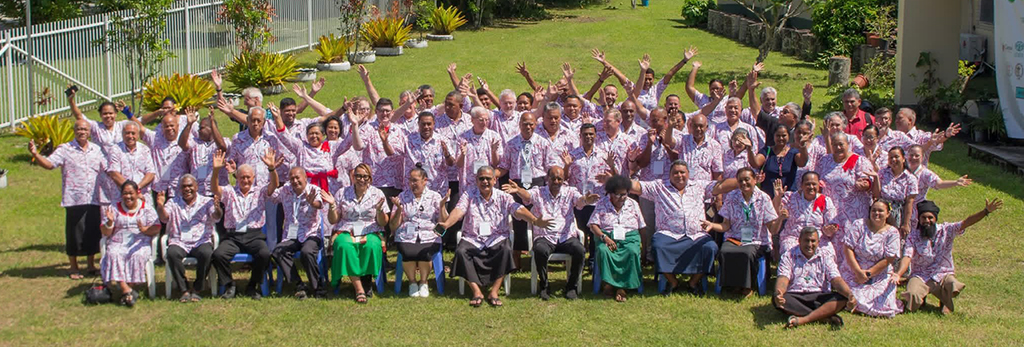
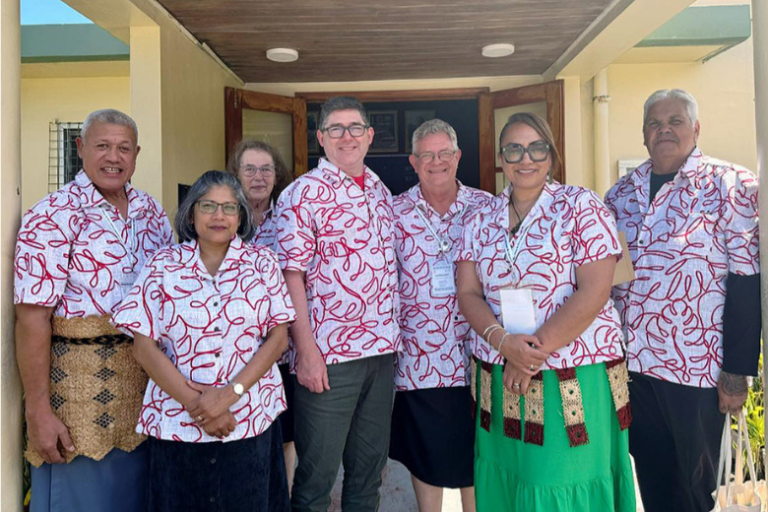
Uniting Church WA Moderator Rev David Jackson attended the Pacific Conference of Churches, Pacific Churches Leaders Meeting in Suva, Fiji in April as part of a Uniting Church delegation including the President Rev Charissa Suli, Co-Chair of Uniting Aboriginal and Islander Christian Congress Rev Ken Sumner and others. Rev Jackson shares a reflection on his time in Fiji and some of the many important issues the conference addressed.
by Rev David Jackson, Moderator
The Pacific Church Leaders Meeting (PCLM) opened with worship, with the General Secretary of the World Council of Churches (WCC) Prof. Rev Dr Jerry Pillay setting the stage for a week of intensive engagement on the big themes that confront the Pacific Churches and their leaders.
The WCC Pacific Ecumenical Decade for Climate Justice was launched in Togoru, Navua, a regional community that is losing one metre of coastline every year. At this community a call for climate justice was given as a matter of urgency.
The theme of the meeting was that God is actively shaping the life and vocation of the pacific churches by transforming them into prophetic, eco-conscious communities that blend indigenous wisdom with Biblical theology, particularly in response to existential climate threats.
Underpinning the meeting was a shared theology developed by previous meetings around the image of the Pacifica Household of God. This shaping is driving a shift from purely evangelical theology to a functional or living theology that emphasises social justice, environmental stewardship (creation care), and regional unity (the Pacifica household of God). This image was further developed through this meeting.
Speakers called the churches to move from stewardship toward custodianship and guardianship, challenging anthropocentric approaches that assume humans stand above creation. The Pacific whole-of-life perspective recognises land, ocean and all living beings within networks of sacred interdependence.
In essence, God is moving the Pacific churches to understand that “to not have the church, to not have spirituality, is to lose your soul”, by linking cultural identity and spiritual survival directly to the care and protection of their environment.
It is recognition that eco-systems are legal entities with inherent rights to exist and thrive, shifting nature from ‘Property’ to a rights-bearing partner. It empowers communities to enforce these rights through courts.
“Do-Kamo” Pathway
“Do-Kamo” pathway: the true human or authentic person embodies the traditional Melanesian values, humanity and a person’s relationship with their ancestors and environment.
Like any household there is good and there is bad. The Pacific nations are amid a drug epidemic with Methamphetamine addiction being harmful to the society. The drug problem has led to changes in health with AIDS/HIV being at exceptional high levels. You see billboards around the city of Suva highlighting the issue. Governments are reaching out to the Church leaders to help them combat the issues. In countries that are over 90% Christian they are aware that the churches are going to be a part of the solution.
The repeated theme was that the Household must not become silent or reactive. It must cultivate truth-telling, restraint, solidarity and courage so that the churches can remain faithful in context marked by polarisation, colonising pressures and competing political loyalties.
I sat with a church leader from the nation of Tuvalu. Halfway between Hawaii and Australia, Tuvalu is made up of three reef islands and six atolls. It is a low-lying island nation and is extremely vulnerable to sea level rise due to climate change. I got his firsthand experience of the existential threats that climate change brings to his community.
Climate Migration and PALM scheme were issues that were addresses in the PCLM. Among the points that were made by contributors was the importance of preserving worship, language, kinship and identity among diaspora communities.
Practical concerns raised in relation to labour mobility included isolation, wage deductions, safety, alcohol and drug use, gambling, abuse of women, accidents and the vulnerability of workers far from their support networks.
There are over 2000 workers currently on the PALM scheme in WA coming from 20 pacific nations. many of these workers come from churches the Uniting Church has an international partnership with. To accompany smaller or displaced communities with greater intentionality so that people do not lose connection with their culture, faith or sense of home is important.
There were many other issues this meeting dealt with that I will happily report on later. I have picked out just a few to give a sense of what happened and the importance such meetings have to bring home the issues that we need to be across as a church that is focussed on pastoral care for vulnerable populations.