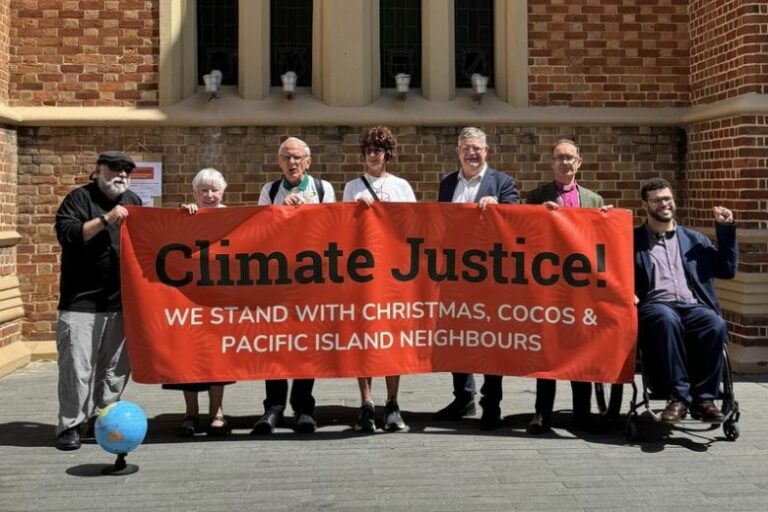
Moderator Stands With Our Pacific Neighbours Calling for Climate Action.
“For many Australians, climate breakdown can feel like a future problem. For many Pacific peoples, it is already a present reality.”
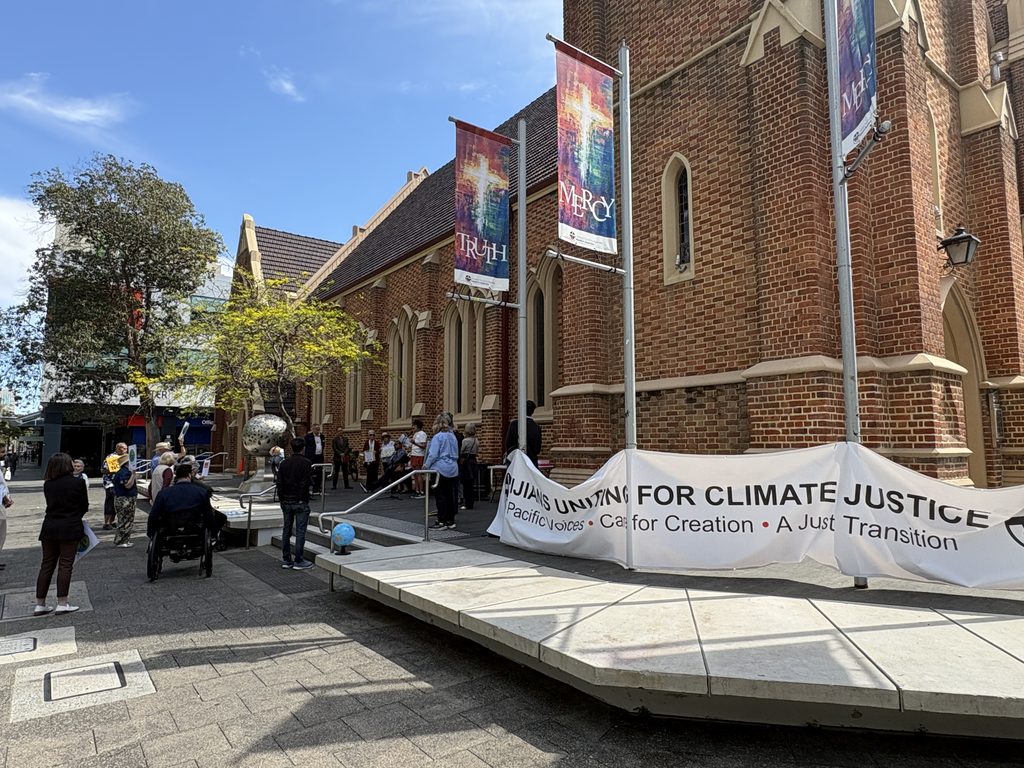
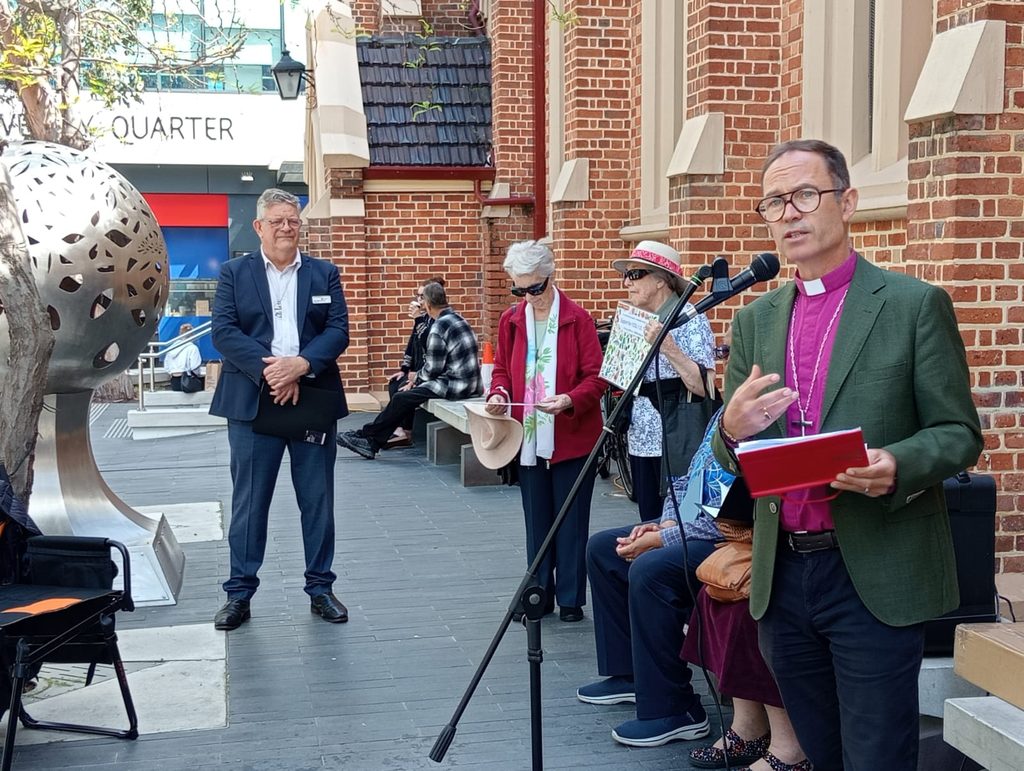
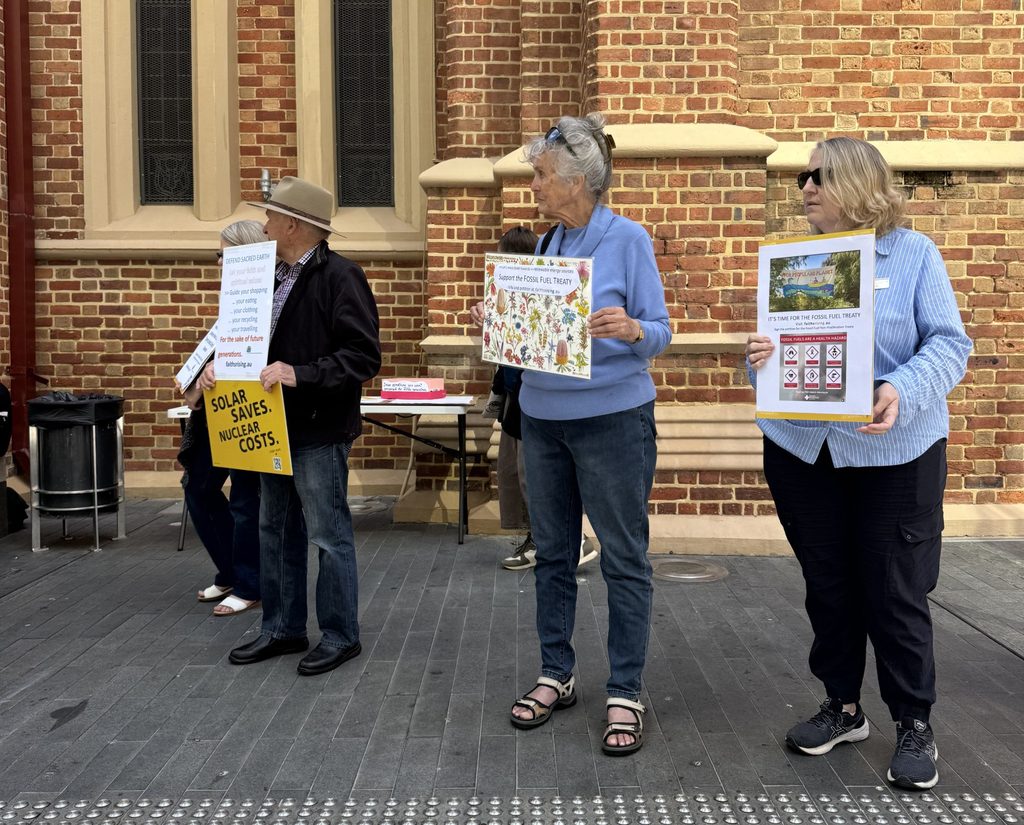
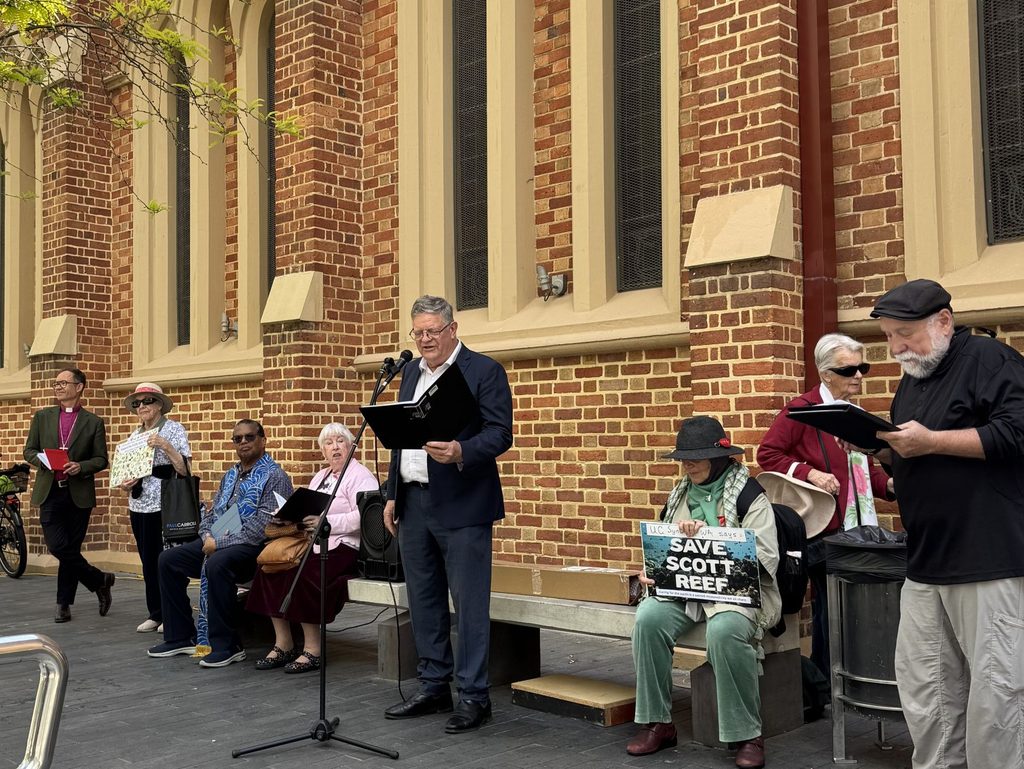
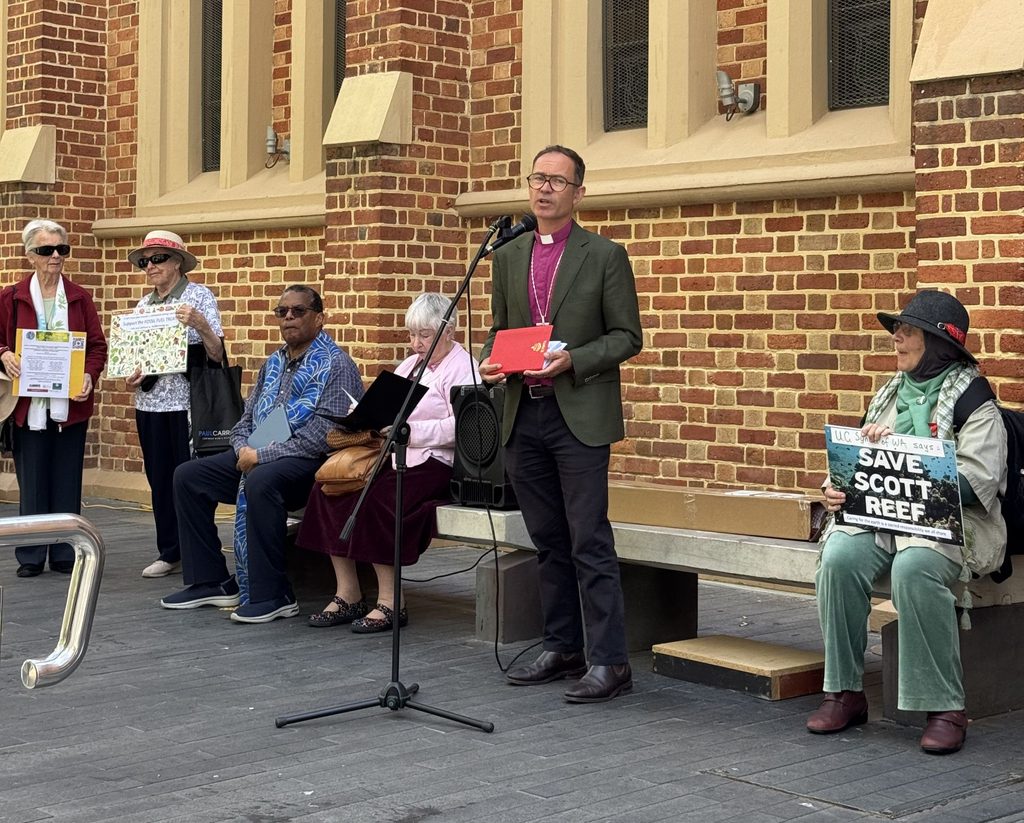
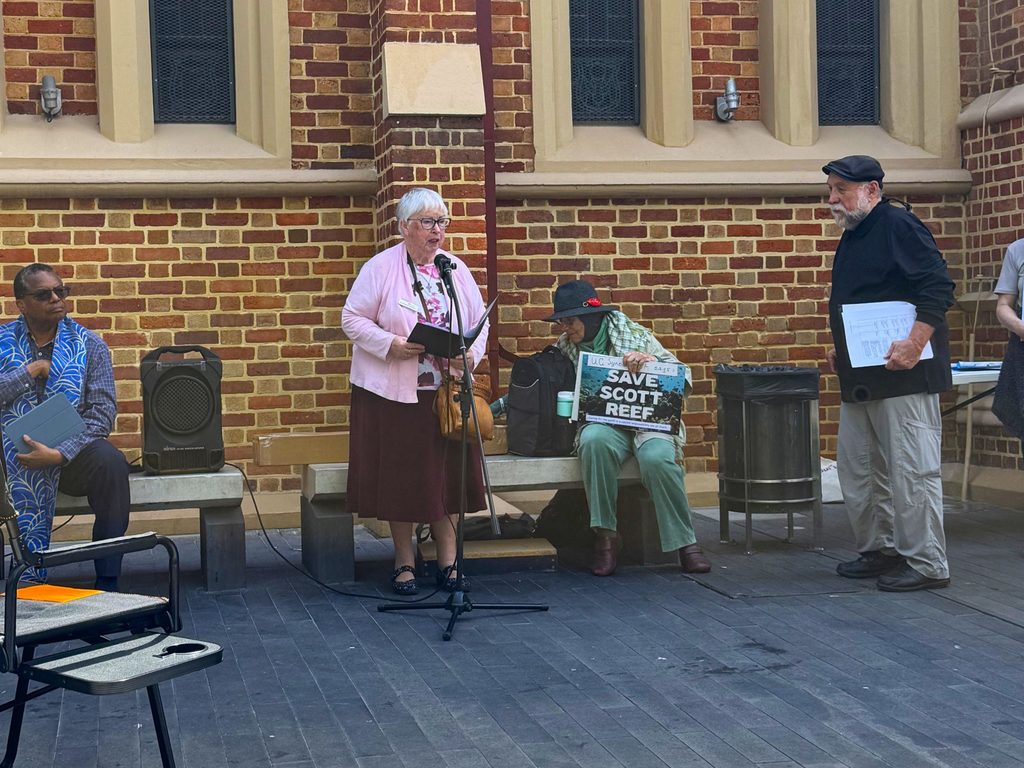
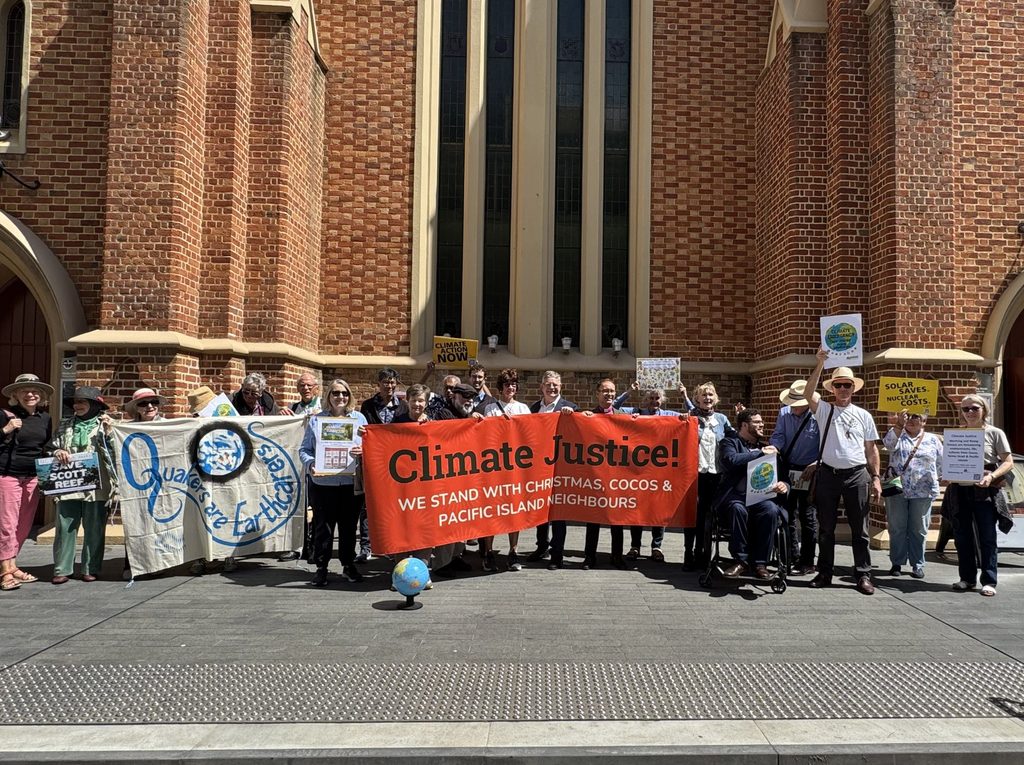
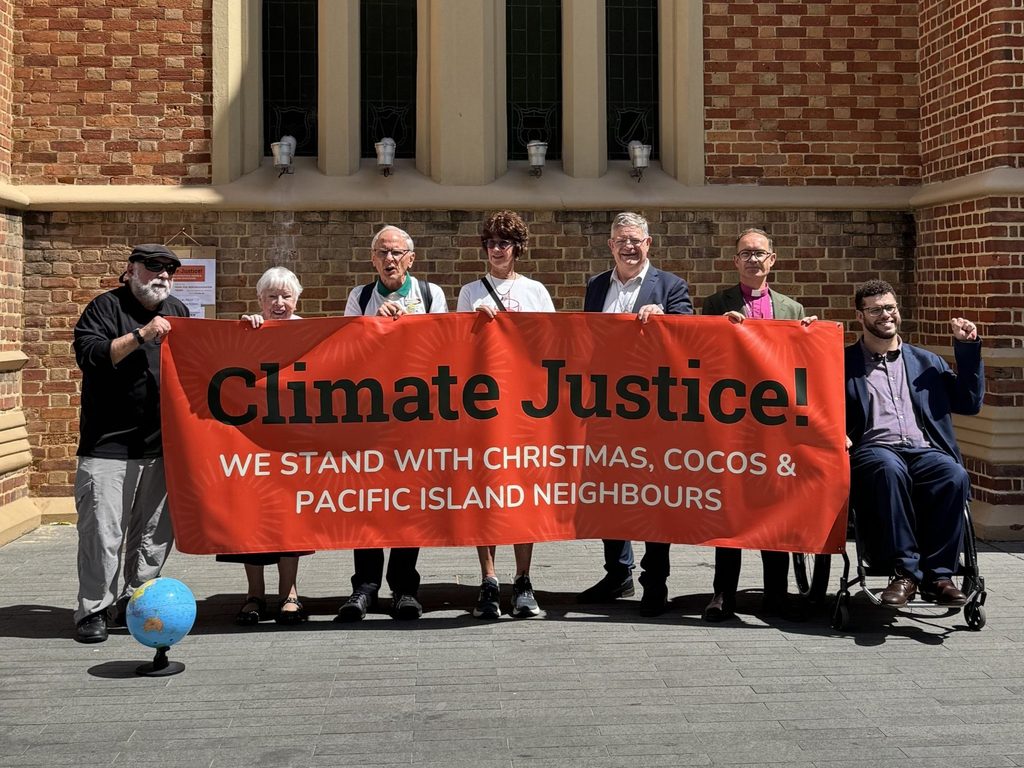
On Tuesday 6 October the Moderator Rev David Jackson CSM stood alongside other faith leaders outside Wesley Uniting Church in Perth as part of a national action led by the Australian Religious Response the Climate Change (ARRCC).
The national movement of public actions reinforced the message in an open letter to the Prime Minister, signed by 80 senior Australian faith leaders including the WA Moderator and Uniting Church in Australia President Rev Charissa Suli, calling on Prime Minister Anthony Albanese to stand with our Pacific neighbours and support a fossil fuel treaty and a planned phase-out of coal, oil and gas. The national action coincided with the COP 31 Pre-COP event in Fiji and Tuvalu from 5 to 8 October 2026, ahead of the COP31 in Antayla, Turkiye in November. Australia is President of Negotiations for COP31.
The open letter calls on the Australian Government to continue listening to the concerns of Pacific nations, and to continue using Australia’s international role to support an accelerated, equitable transition away from fossil fuels.
As a speaker at the Perth action along with along other local faith leaders including Assistant Anglican Bishop of Perth, Right Reverend Hans Christiansen, Wendy Wisschoski of the Baha’i Spiritual Assembly Fremantle, Rev Frances Hadfield of Wesley Uniting Church, Rev Jackson shared from his personal experiences of a recent visit to Fiji for the World Council of Churches (WCC) Pacific Churches Leaders Meeting where the Pacific Ecumenical Decade of Climate Justice Action was launched. Only a few days earlier the Moderator was attending the UCA Fijian National Conference held in Fremantle where more than 700 members of the Fijian National Conference joined their voices in a powerful call for climate justice.
Moderator’s address to the Perth gathering
“Friends, I stand here today as Moderator of the Uniting Church in Western Australia, but also as someone who has recently sat with church leaders and communities from across the Pacific.
Earlier this year, I attended gatherings in Fiji where I heard firsthand the concerns of people living on the front line of the climate crisis.
For many Australians, climate breakdown can feel like a future problem. For many Pacific peoples, it is already a present reality.
Rising seas, increasingly severe weather events, changing rainfall patterns, and threats to food and water security are affecting communities today.
What struck me most was that Pacific church leaders are not speaking primarily about economics or politics. They are speaking about people. About families. About culture. About identity. About the hope that future generations will be able to remain connected to the lands and waters that have shaped them for generations.
Last weekend, more than 700 members of the Fijian community in the Uniting Church gathered here in Perth. Their message was clear:
Climate justice is needed now.
They reminded us that climate breakdown is already affecting Pacific communities, threatening homes, livelihoods, food security, culture and identity.
In Fiji, I visited the village of Togoru. Some of the people of that village have already been forced to relocate because of rising sea levels and repeated flooding. As we gathered at the village to mark the World Council of Churches (WCC) Pacific Ecumenical Decade of Climate Justice Action we could see the effects of the climate breakdown with the erosion of the coastline in clear sight of the event. I could see the homes that are under threat by the advancing ocean and the family memories and community life that once were thriving here. I could see the abandoned homes. Relocation is not simply about moving buildings. It is about leaving behind ancestral connections to place, history and identity.
That experience brought home to me a truth we cannot ignore that climate breakdown is not only an environmental issue. It is a human issue. It is a moral issue. It is a matter of justice.
And we know what is driving it.
The continued burning of coal, oil and gas is fuelling a climate crisis that falls most heavily on those who have contributed least to the problem.
Communities throughout the Pacific are experiencing stronger storms, rising seas and increasing threats to food and water security, even though their contribution to global emissions is minuscule compared with many wealthier nations.
But this also reminded me that Pacific peoples are not simply victims of this crisis. Across the Pacific, communities, churches, women and young people are showing remarkable resilience, leadership and hope. And their call to Australia is simple:
Listen to Pacific voices. Stand with Pacific peoples. Act now.
As people of faith, we believe that caring for creation and caring for our neighbours belong together. We cannot separate the wellbeing of people from the wellbeing of the Earth that sustains us.
Pacific leaders are not asking for charity. They are asking for solidarity. They are asking us to listen. And they are asking us to act with urgency and courage.
So today I join my voice with the voices of our Pacific neighbours.
Their commitment is clear.
Our responsibility is clear.
The time for action is now.
Climate Justice Now.“
Uniting Church urges Australia to stand with Pacific on fossil fuels
UCA President Rev Charissa Suli is one of 80 senior faith leaders who have signed the open letter to the Prime Minister to support a global Fossil Fuel Treaty and a fair, planned transition away from coal, oil and gas.
Rev Suli says that Australia must listen to Pacific communities already living with the impacts of climate change and ensure their priorities are heard in global negotiations.
“Being a good neighbour means more than words. It means listening, accompanying one another, and being prepared to act on what we hear,” she said.
“As Australia assumes the role of President of Negotiations for COP31, we have a responsibility to listen carefully to Pacific leadership and to carry those priorities into Australia’s leadership of the negotiations.”
Read more on the UCA Assembly website here.